
Role

CEO – Chief Executive Officer

Clear leadership for the long-term direction of your company

Who is a CEO?

A CEO is the highest-ranking executive responsible for setting direction, making key decisions, and ensuring overall business performance. They lead the organization by defining priorities, aligning teams, and maintaining accountability across all levels. A CEO works closely with the board and senior leadership to translate strategy into execution. Their role is not only to guide the company forward but also to ensure that operations, people, and resources remain aligned with long-term objectives. Through consistent leadership, they create clarity in both stable and uncertain environments.
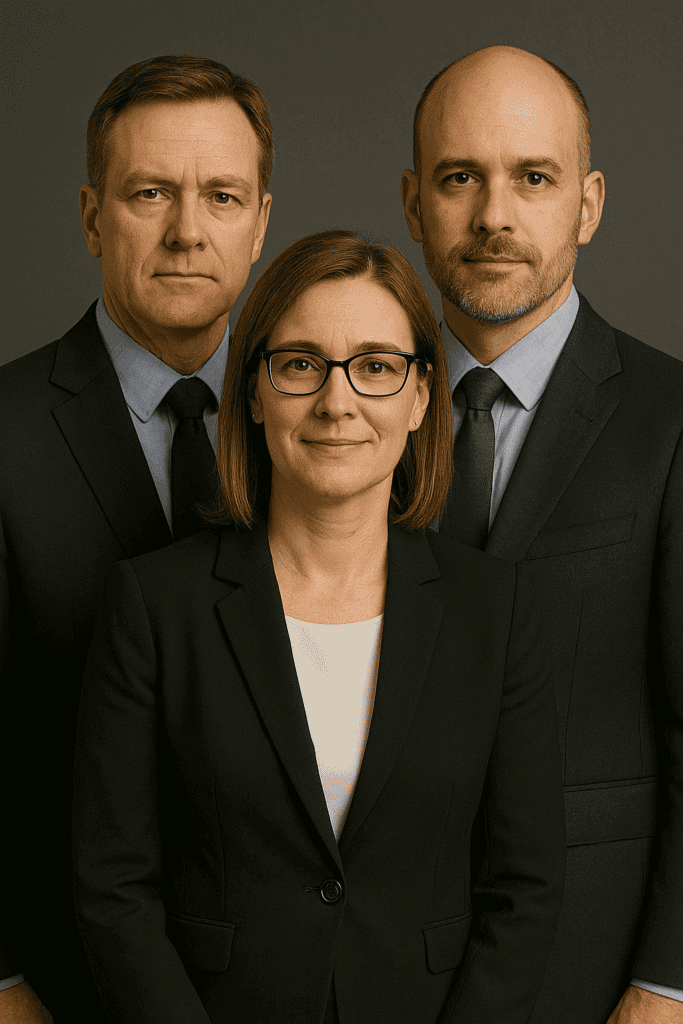
Team of CEOs in suits standing next to each other with subtle smiles

*Answer a 1-minute questionnaire to receive the expert’s profile and availability within 24 hours – free of charge.

How a CEO helps your business

01

Direction setting

Without a clear direction, teams tend to interpret priorities differently. A CEO defines where the company is going and what actually matters right now. This removes ambiguity and gives people a shared reference point for decisions. Work becomes more focused because teams no longer guess what is important. Over time, this clarity improves both speed and consistency across the organization.
02

Organizational alignment

Departments often move in parallel, but not always in the same direction. Misalignment shows up in duplicated work, conflicting decisions, or delayed execution. A CEO brings these parts together by clarifying roles and resolving overlaps in responsibility. Coordination improves because expectations are no longer vague. As alignment strengthens, collaboration becomes more natural and less forced.
03

Resource allocation

Every decision about financial, human, or operational resources shapes what the company can actually deliver. A CEO decides where effort should be concentrated and what should be deprioritized. This prevents resources from being spread too thin across too many initiatives. Focus shifts toward areas that have real impact. Over time, this leads to stronger and more sustainable performance.
04

Leadership development

An organization rarely performs better than its leadership layer. A CEO invests time in developing senior managers, setting expectations, and reinforcing accountability. Strong leaders reduce the need for constant escalation and enable faster decision-making. Responsibility becomes distributed rather than centralized. This creates a more resilient organization that can operate without relying on a single person.
05

External representation

The way a company communicates externally shapes how it is perceived. A CEO represents the business in front of investors, partners, and key stakeholders. Clear communication builds trust and reduces uncertainty about direction or performance. Relationships become more stable because expectations are understood. Over time, this strengthens the company’s position in the market.

Trusted by industry leaders

When do you need a CEO

A CEO becomes necessary when leadership is no longer clearly defined at the top level. At a certain level of growth or complexity, leadership must be centralized to ensure consistency and speed. Without this role, priorities compete, execution slows, and ownership becomes unclear.

Lack of clear ownership

Important decisions get delayed or passed between people without resolution. Different leaders may take partial responsibility, but no one owns the outcome. This creates hesitation and slows execution. A CEO introduces clear ownership and defines decision boundaries. Decisions start happening faster and with more confidence. Accountability becomes visible across the organization.

Conflicting priorities

Teams begin to optimize for their own targets instead of the company’s direction. Misalignment grows between sales, operations, finance, and product. Effort is spent in different directions, which reduces overall impact. A CEO aligns priorities and ensures trade-offs are made consciously. Teams start working toward shared outcomes instead of isolated goals. Coordination improves without adding complexity.

Unstructured growth

Growth introduces more people, more decisions, and more dependencies. Without structure, roles become unclear and processes start breaking down. What used to work informally no longer scales. A CEO introduces clarity into how the organization is structured and how decisions flow. Growth becomes more controlled and less reactive. This allows the company to expand without losing stability.

Execution stalls

Plans are discussed, but progress is inconsistent or difficult to measure. Teams may start strong but lose direction over time. The issue is rarely strategy, but lack of follow-through. A CEO reinforces execution by setting clear priorities and tracking progress. Gaps become visible and easier to address. Work moves forward with more consistency.

Simple Process.
Zero Delays.

Getting the right expert on board shouldn’t take weeks. With GQ Interim, it takes just days.
Our process is fast, clear, and straightforward — just like our solutions.

01

Reach out or submit
a request

Tell us about your challenge, goal, or expert profile.

02

We deliver a solution within 72 hours

You’ll receive a tailored expert ready to meet your needs.

03

Immediate
deployment

Fast agreement, clear terms, and instant onboarding.

04

Support throughout the entire project

Tell us about your challenge, goal, or expert profile.

CEO's perspective

“Interim solutions drive continuous progress.“

“Our teams and experts provide strategic flexibility and top-tier expertise to navigate complex changes and critical challenges. Through a targeted and adaptive approach, we ensure process optimization, stability, and sustainable growth – no matter the situation.”

CEO of GQ Interim

Why Work with GQ Interim

Flexibility

We adapt quickly to your needs — whether you’re scaling up, managing change, or solving urgent challenges.

Professionalism

We partner exclusively with top-tier professionals who deliver excellence and drive business results.

Attitude

We value strong ethics, accountability, and a solution-driven mindset in everything we do.

Cost comparison

Optimize costs with interim solutions

While you’re still recruiting, our experts are already delivering. Check the table below to see how interim solutions help reduce costs and deliver faster results — with no hidden fees and less strain on your internal team compared to traditional hiring.

Full-time employee
GQ Interim expert
Annual cost
€137,728
€120,000
Start time
3 - 6 months
48 - 72 hours
Onboarding
2 - 3  weeks
Not needed
Contract
Long-term, fixed
Fully flexible
Hidden costs
Taxes, bonuses, sick days, paid holidays
None - 1 invoice
Admin load
60 - 120 hours / year
0 hours
Results
Delayed
Immediate
Project risk
High
Low

Key features of effective

CEO

Not everything can be done at once, even if everything seems important. A CEO identifies what deserves attention and what can wait. This prevents the organization from spreading effort too thin. Teams gain clarity on where to focus. As priorities become clearer, execution becomes more effective. Priorities are revisited regularly to reflect changing conditions. This keeps the organization aligned with what matters most at any given time.
Decisions made under pressure often define how the organization operates. A CEO who relies on a clear decision-making approach creates predictability. Teams understand how decisions are reached and what to expect. This reduces hesitation and second-guessing. Over time, confidence in leadership grows. Consistency also helps during uncertainty, when direction matters most. It creates an environment where people can act without waiting for constant validation.
Not all issues appear in reports or metrics. Tension between teams, unclear communication, or hidden dependencies can slow progress. A CEO pays attention to how the organization actually functions in practice. This makes it easier to address problems before they escalate. Collaboration improves because friction is reduced early. It also supports smoother execution of company priorities. Awareness extends beyond structure into how people interact daily. This helps maintain balance across the organization.
Strategy only matters if it leads to action. A CEO ensures that plans are not just defined but carried through. Progress is monitored, and adjustments are made when needed. This keeps momentum consistent across teams. Execution becomes something visible and measurable. It ensures that strategic direction translates into real outcomes. Expectations are reinforced through regular follow-up. This creates a culture where delivery is part of everyday work.

We help you tackle
your challenge
- quickly and effectively.

At GQ Interim, we support companies across industries by embedding highly skilled professionals where they’re needed most – from project acceleration to leadership in times of change.

Fast alignment. Minimal ramp-up. Immediate impact.

Ready to move forward?

Tell us what you need and we’ll take it from there.

What you gain:
Immediate access to senior-level experts
Flexible support where and when you need it
Impact without unnecessary overhead
Certifications

Certifications & Trust

Trusted by leading manufacturers
and technology companies across
the CEE region.

TISAX (AL3)

FAQ

Frequently asked questions

Looking for answers about how Interim Solutions work? Our FAQ section covers common questions, helping you quickly understand how we deliver tailored solutions for your business needs.

A CEO sets company direction, oversees execution, and ensures alignment across all business functions. They are responsible for both strategic decisions and overall company performance.
A CEO aligns strategy, resources, and teams to ensure the organization operates efficiently and meets its objectives. Their leadership directly affects decision-making and execution quality.
A company benefits from strong CEO leadership during growth, strategic changes, or periods of increased complexity when coordination and direction are critical.
An effective CEO combines clear direction, consistent decision-making, and strong execution focus. This ensures that strategy is not only defined but also successfully implemented.