
Automotive interim management means putting an experienced manager or expert into a plant, a quality department or a launch team for a fixed assignment, usually 6–12 months. They take over a role that cannot stay empty or a problem the team cannot solve alone: a launch, a customer escalation, a failed audit or a restructuring. When the result is delivered, they hand over.
Automotive plants run on tight customer schedules, and every gap shows up fast. A quality manager leaves before an IATF 16949 audit, a new line has to reach its rate before start of production, or an OEM puts a supplier on controlled shipping. Engineers, quality specialists and experienced managers are hard to find, and a permanent search takes months. This guide explains when interim experts are the faster answer, which roles companies fill this way, how an assignment works and how it compares with consulting or a permanent hire.
- Interim experts fill critical automotive roles within days, while the permanent search continues.
- Typical assignments: launches and ramp-ups, quality escalations, audits, supplier crises and restructuring.
- Look for comparable experience: the same role, the same type of plant, results with numbers.
- An assignment usually lasts 6–12 months and ends with a planned handover.
What is interim management in automotive?
An interim manager or interim expert is an experienced professional who joins a company for a fixed period, takes full responsibility for a role or a project and leaves once the agreed result is reached.
Unlike a consultant, an interim manager does not hand you a report. They take the role, lead the team and are measured on the result. Unlike a permanent hire, they start within days and leave when the job is done. You can read more about the role in our article on what an interim manager does.
Interim experts also bring distance from the established system. They have seen many plants, customers and processes, so they notice what the team no longer sees, and they have no internal politics to protect. In automotive, that outside view often decides how fast a stuck launch or a quality problem moves.
When do automotive companies need an interim expert?
Most requests from automotive suppliers and OEM plants come from a handful of situations. They have one thing in common: the cost of waiting is higher than the cost of the assignment.
| Situation | What is at stake | Typical interim role |
|---|---|---|
| Launch and ramp-up before start of production | Delayed SOP, missed customer rate, penalties | Launch or program manager, process engineer |
| Customer escalation or controlled shipping | New business hold, sorting costs, the customer relationship | Quality manager, supplier quality engineer |
| IATF 16949 or VDA 6.3 audit findings | Certificate at risk, customer audits | Quality manager, quality engineer |
| Plant manager or key leader leaves suddenly | Decisions stop, the team loses direction | Interim plant manager, operations manager |
| Supplier in distress or a resourcing project | Line stoppage, missing parts | Supply chain manager, supplier development engineer |
| Restructuring or turnaround | Cash, cost and headcount under pressure | Interim COO, CFO or crisis manager |
| New technology, EV or battery production | New processes the team has not run before | Process, automation or project manager |
In Central and Eastern Europe, these situations are common in plants in Slovakia, the Czech Republic, Hungary and Poland that supply German and French OEMs. The expert needs both the technical depth and the language of the team. For a structured approach to recurring defects, see our guide to structured problem solving.
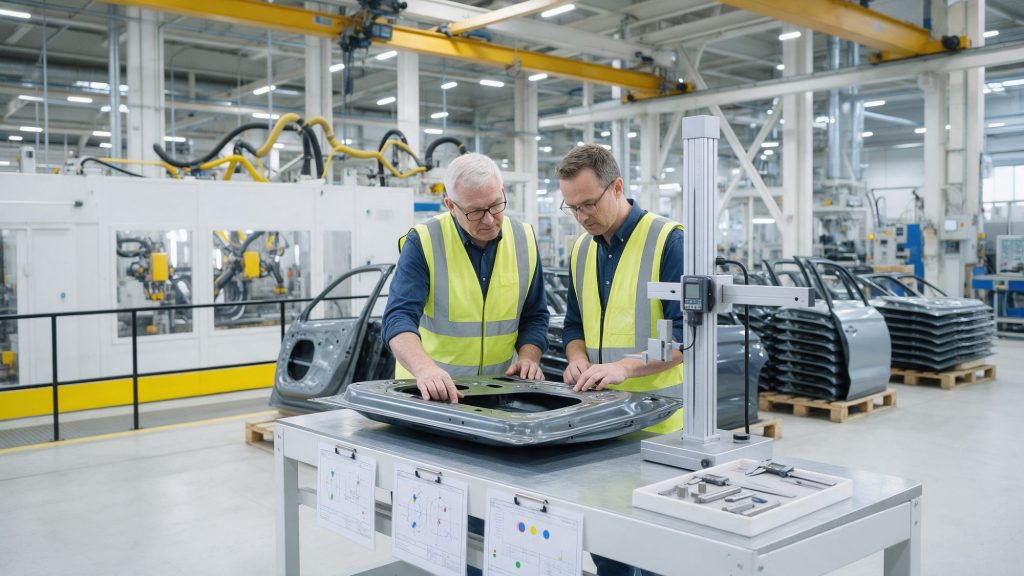
Which automotive roles are filled with interim experts?
Requests range from single engineers to the plant leadership. These are the roles automotive companies fill most often:
What should an automotive interim expert bring?
A strong CV is not enough. In automotive, the expert must know the customer requirements and the standard methods from day one, because there is no time to learn them on the job.
- Comparable assignments in automotive plants, with results you can check.
- Working knowledge of IATF 16949 and the core tools: APQP, PPAP, FMEA, MSA and SPC.
- For German customers, experience with VDA 6.3 process audits and VDA standards.
- For electronics and software, familiarity with ASPICE and ISO 26262 where the role needs it.
- Experience with OEM customer portals, 8D reports and customer-specific requirements.
- The language of the team and of the customer, often German or English plus the local language.
- The ability to switch between management and hands-on work on the shop floor.
One of the biggest challenges, but also opportunities, is the ability to adapt to a new project. We have to quickly learn new processes and procedures and integrate into a new team. That is why the ability to adapt is key to managing a project successfully.
Pavol has led quality projects as a consultant and as head of a quality department for automotive suppliers in Slovakia and Germany. His point applies to every automotive assignment: the expert has a few days, not months, to understand the processes and earn the trust of the team.
The interim management guide for manufacturing companies
How to brief, hire and onboard an interim manager, with checklists you can use on your next assignment.
- When an interim manager pays off
- How to write a mandate
- The first 30 days, week by week
How does an automotive interim assignment work?
Most assignments follow the same five steps. For the selection itself, see our guide on how to choose an interim manager.
- Describe the situation and the resultWhat has to be different when the expert leaves: the launch at rate, the audit passed, the escalation closed. Add the deadline and the mandate.
- Get a shortlist within daysThe provider proposes two or three experts who have solved the same problem in automotive, with references from earlier assignments.
- Interview and startYou interview the candidates on comparable cases. The chosen expert starts on site, often within the same week.
- Deliver against milestonesThe expert agrees milestones with the sponsor in the first weeks and reports on them every week.
- Hand overBefore leaving, the expert trains the successor or the team, documents the changes and agrees the end date.
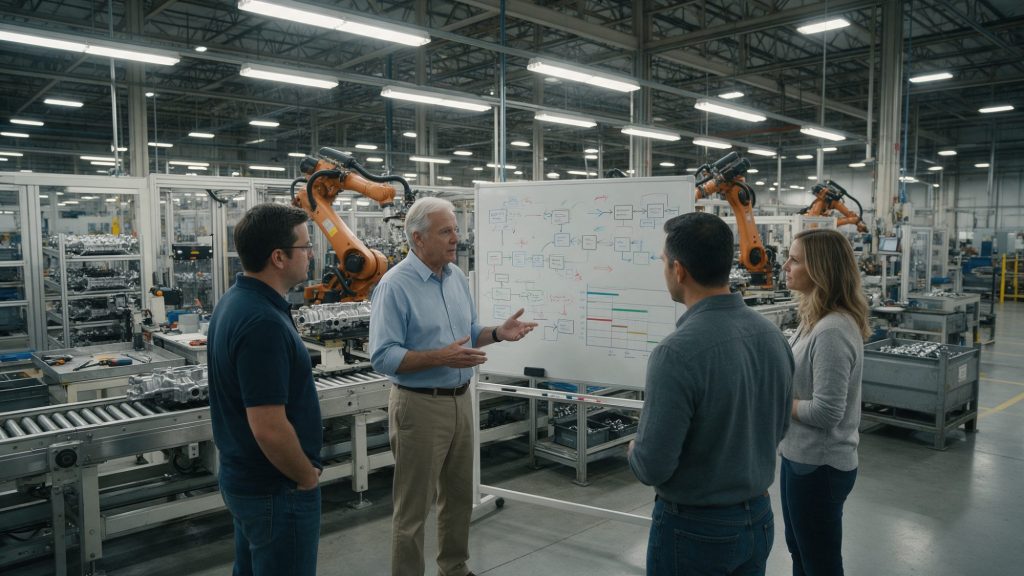
Many companies call for help only after the customer has escalated or the certification body has issued a major nonconformity. An expert who starts earlier has more options and usually costs less in total than containment, sorting and penalties.
Interim expert, consultant or permanent hire?
All three can solve an automotive problem, but they do different jobs. A short comparison helps you choose. If you are weighing an internal stand-in, read interim vs acting manager.
| Criterion | Interim expert | Management consultant | Permanent hire |
|---|---|---|---|
| Role | Takes the role and leads the team | Analyzes and recommends | Takes the role long term |
| Start | Days | Weeks | Months, plus notice period |
| Responsibility | For the result | For the recommendation | For the result |
| Duration | Usually 6–12 months | Project phase | Open-ended |
| Best for | Launches, escalations, gaps, turnarounds | Strategy and diagnosis | Stable long-term roles |
How GQ Interim helps automotive companies
GQ Interim has delivered 1,550+ projects since 2011 in automotive and other industrial companies across Central and Eastern Europe, for clients such as Stellantis, Porsche, Siemens, Valeo and Magna. Our database holds 7,500+ verified experts: plant managers, quality managers, launch managers, supplier quality engineers and C-level managers. We arrange the contract, travel and accommodation, so the expert can focus on the result. We are certified to ISO 9001 and TISAX. See our interim management for automotive services.
Conclusion
Automotive does not wait. When a launch, an audit or a customer escalation cannot wait for a permanent hire, an interim expert who has solved the same problem before is the fastest way to get control back. Define the result, choose on comparable experience and plan the handover from the start.
Get an automotive expert on site this week
Tell us which role is open and what has to happen. We come back with profiles of experts who have done it before.
Frequently asked questions
What is automotive interim management?
It is the temporary placement of an experienced manager or expert in an automotive company to fill a critical role or deliver a project, such as a launch, a quality escalation or a restructuring. The interim manager takes full responsibility for the result and hands over when the assignment ends.
When should an automotive supplier hire an interim manager?
When a key role is suddenly empty, when a launch or ramp-up is behind plan, when a customer has escalated or put you on controlled shipping, before or after a difficult IATF 16949 audit, or during a restructuring. In each case the cost of waiting is higher than the cost of the assignment.
How long does an automotive interim assignment last?
Usually 6–12 months, depending on the situation, the complexity of the problem and the time the solution needs. Short assignments for an audit or a containment can take a few weeks, launches and turnarounds often take longer.
How quickly can an interim manager start?
With a provider that knows its experts, you get a shortlist within days. GQ Interim gets the right expert on site within 72 hours of your request.
What does an automotive interim manager cost?
Interim managers are paid a day rate. It depends on the role, the seniority, the language and the location: a quality engineer costs less than an interim plant manager or a turnaround COO. Compare it with the cost of the open problem, such as penalties, sorting or a delayed launch. Read more in our article on interim manager salary.
Can an interim manager help with an IATF 16949 audit or a customer escalation?
Yes. An experienced interim quality manager can prepare the audit, close nonconformities, lead 8D problem solving with the customer and get the plant off controlled shipping. Choose someone who has handled the same customer and the same type of escalation before.
What is the difference between interim management and consulting in automotive?
A consultant analyzes and recommends. An interim manager takes the role, leads the team and is responsible for the result. In a launch or an escalation, where things must change on the shop floor, interim management is usually the faster choice.
Should I hire an interim expert directly or through a provider?
A provider is faster when you do not know the right person. It checks references, replaces the expert if it does not work, handles the contract, travel and accommodation, and reduces the risk of disguised self-employment that comes with engaging individuals directly.
Do GQ Interim experts work outside Slovakia and the Czech Republic?
Yes. Our experts work across Central and Eastern Europe and in Western Europe, mainly in Germany. We look for experts who speak the language of the team and of the customer.