


- What is CE marking?
- Meeting EU requirements and conforming to directives
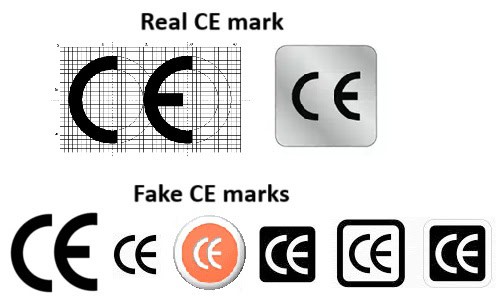
- Comparison of real and fake CE marking
What is CE marking?
The letters “CE” are the abbreviation of French words “Conformité Européene” which literally means “European Conformity“.
A CE mark is a symbol that must be placed to all products before they can be sold within the European market. The mark shows that a product:
- meets the requirements of relevant European product directives.
- meets all the requirements of the relevant recognized European harmonized performance and safety standards.
- fits for its purpose and will not put in danger any lives or property.
The manufacturer with implementation of CE marking assures that appropriate technical documentation supporting the use of the mark is available and can be provided upon request. Also by the importer or responsible person for its placing on the market.
On the other side CE marking does not provide any specific information to the consumer. It is not a quality assurance declaration, it does not show evidence of third-party testing.
Meeting EU requirements and conforming to directives
Placing a CE mark to a product is taken as meaning of conformance for authorities within the EU member states that the product meets all appropriate EU requirements. There is an EU requirement that products which are not in conformity with the provisions of the directives are not allowed to circulate in the EU countries and there should be taken an appropriate action to remove these products from sale and use within the specific state. One example is the import of toys from China to the UK which, when examined, were found to contain a high level of poisonous toxins that endanger life.
The importer and/or manufacturer must take steps to conform with safety requirements, produce the appropriate records and documentation and decide on the necessary procedures to maintain production in conformity with directives.
In case when there are more han one CE marking directive concerns to a product and a transitional period allows the manufacturer a choice of which to apply, the marking indicates conformity only with those directives applied by the manufacturer. In this case the directives that have been applied must be identified in the documents or notices accompanying the product. Where the manufacturer does not list those directives that have been applied, the authorities will assume that a declaration of conformity is available for all applicable directives.
Comparison of real and fake CE marking
Many times happens that some manufacturers do not meet all requirements of EU directives and on the product place fake CE marking.
The top image shows the real CE mark while the lower image shows examples of fake ones.
Download our e-book
Download our free e-book to discover how GQ Interim can transform your business with expert leadership solutions!
Conclusion
CE marking is a passport to the European market, signaling that a product complies with all applicable EU directives and harmonized safety standards. It places clear responsibility on manufacturers and importers to maintain technical documentation, ensure ongoing conformity, and withdraw non‑compliant goods when required.
Crucially, the CE mark is not a quality seal or proof of third‑party testing—it simply attests to regulatory compliance. When multiple directives apply, they must be addressed and documented transparently. Finally, vigilance against counterfeit CE marks is essential to protect consumers, uphold safety, and preserve trust in the single market.
Interested in Interim Expert?
Discover how interim management can dramatically increase the efficiency of your business. Get in touch with our team to learn how working with GQ Interim will improve your company.
- Get started within few days
- Database of 10 000+ consultants
- Solving crucial problems of your business
- Custom solutions for your business needs
- Proven results with measurable impact
Related articles
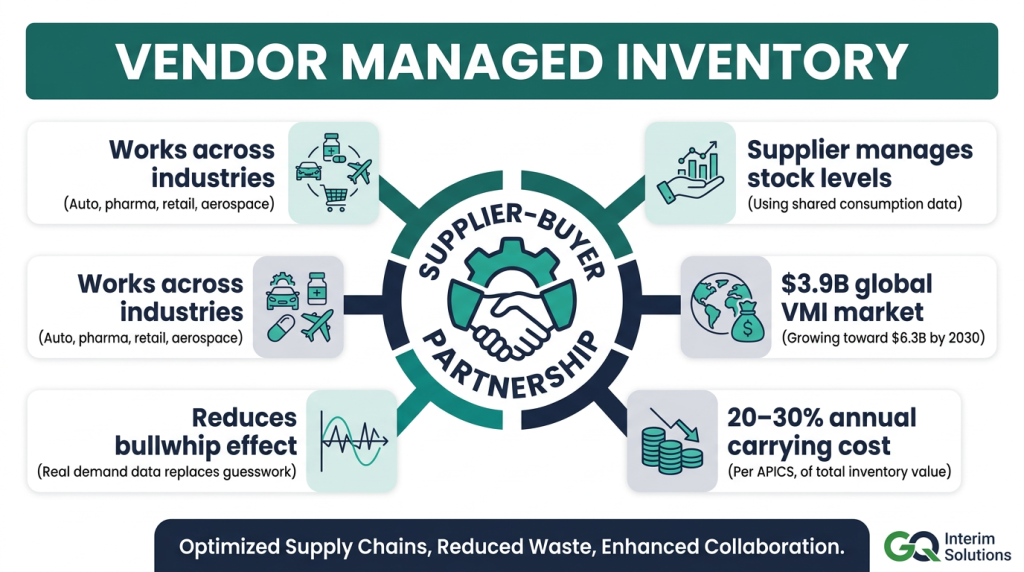
- Wondering if Vendor Management Inventory is right for your plant or network? This guide unpacks how VMI works, where it delivers savings and stability, the pitfalls to avoid, and the KPIs and tech you need to stay in control.

- Managing every supplier the same way rarely delivers the best results. Supplier segmentation helps businesses prioritize supplier relationships, reduce risk, and focus procurement efforts where they create the greatest value.

- Hiring a senior sales leader is one of the most important decisions a growing business can make. Learn how sales executive search works, when it's the right choice, and why it consistently delivers stronger long-term hiring outcomes than traditional recruitment.

- Great products don't happen by accident. Behind every successful product is strong leadership that aligns business strategy, customer needs, and cross-functional teams. Discover what product leadership involves, why it matters, and how it helps businesses make better product decisions.
