


- Measuring & monitoring cost
- Cost recovery
- Supplier audit
- Supplier scorecard
- Closed loop corrective action
- Engaging suppliers in quality systems
Practice #1: Measuring & monitoring cost of poor supplier quality
Many organizations do not monitor and measure the cost of poor supplier quality attributed to their suppliers. Some companies only track supplier by measuring scrap and increase in blocked inventory. For monitoring the supplier costs of poor quality right should be calculated all these indicators:
- Scrap, rework, sorting and processing costs due to poor quality.
- Blocked inventory and performing costs due to inspection failure.
- Line shutdown attributed to poor quality.
- Using equipment that is capacity constrained for rework due to poor quality, reducing the overall utilization of the production line.
- Freight costs due to expedited shipment to customers/downstream plants.
- Warranty expenses due to poor quality.
- Recall expenses due to poor quality of products shipped to customers.
Practice #2: Cost recovery
Companies have to proactively work with their suppliers to improve their quality and they can possibly reduce their own costs of poor quality. Therefore a cost-recovery system, where suppliers are charged back for providing poor quality of components, is an effective way to introduce business discipline and accountability into the supply chain.
Practice #3: Supplier audit
Supplier audits are one of the best ways to ensure that supplier is following the processes and procedures that you agreed to during the selection processes. The supplier audit identifies non conformances in manufacturing process, shipment process, engineering change process, invoicing process and quality process at the supplier. After the audit, the supplier set up the corrective actions which must be implemented by the supplier within an agreed-upon timeframe. A future audit ensures that these corrective actions have been successfully implemented.
Download our e-book
Download our free e-book to discover how GQ Interim can transform your business with expert leadership solutions!
Practice #4: Supplier scorecard
Supplier scorecards are one of the best methods in using facts to classify the supplier’s relative performance within the supply base and tracking improvement in supplier’s quality over time. Scorecards also provide a data point into any future business negotiations. Following are the key operational metrics that leading manufacturers track in their supplier scorecard:
- PPM of supplier components.
- Number of corrective actions last quarter.
- Average response and resolution time for corrective actions.
- Number of processed 8D reports per month.
- Blocked inventory levels.
- Number of rework hours due to supplier components.
- Percentage of actual cost of poor quality recovered from suppliers.
- Number of customer complaints on product quality.
- Warranty reserves.
- Relative ranking of supplier.
- Performance against benchmark.
Practice #5: Closed loop corrective action
Systematic reductions in the cost of poor quality can be achieved by implementing a quality management system (if it s not implemented) or improving of the system to assure that provides an integrated and closed loop corrective action process. In a manufacturing organization, when deviations, nonconformance, out of specifications, quality incidents or customer complaints occur, corrective and preventive actions need to be initiated to remove the problems.
Once a quality problem has been identified, the first step is to initiate an investigation and to properly identify the root cause of the problem which has to be done properly.
After the root cause has been identified, corrective actions are set and routed for approval. When approved, appropriate changes are implemented in the environment and then the corrective action is closed out. These changes may include amendments to a documented procedure, upgrading the skill set of an employee through a training and certification process, or recalibrating the manufacturing equipment.
Practice #6: Engaging suppliers in quality systems
It is critical for manufacturers to engage suppliers in all aspects of their quality management system, so that the supply-base is fully integrated into the quality management system being rolled out. Key requirements include:
- Supplier should be able to provide quality-related data to the manufacturer. A web-based quality management system dramatically reduces the cost of ownership for a supplier by providing the right information to a key customer without having to deploy software in-house.
- Manufacturer should be able to get every relevant stakeholder within the supply base to use the quality system without having to train every casual user.
Conclusion
Supplier quality management is not just about addressing defects—it’s about creating a collaborative, data-driven framework that prevents problems before they occur. From tracking the cost of poor quality to engaging suppliers in integrated quality systems, each best practice strengthens the supply chain’s reliability and performance. When organizations commit to these strategies, they enhance product quality, reduce operational costs, and build long-term supplier partnerships based on trust, accountability, and continuous improvement. This leads to a resilient supply chain capable of meeting customer expectations consistently.
Interested in Interim Expert?
Discover how interim management can dramatically increase the efficiency of your business. Get in touch with our team to learn how working with GQ Interim will improve your company.
- Get started within few days
- Database of 10 000+ consultants
- Solving crucial problems of your business
- Custom solutions for your business needs
- Proven results with measurable impact
Related articles
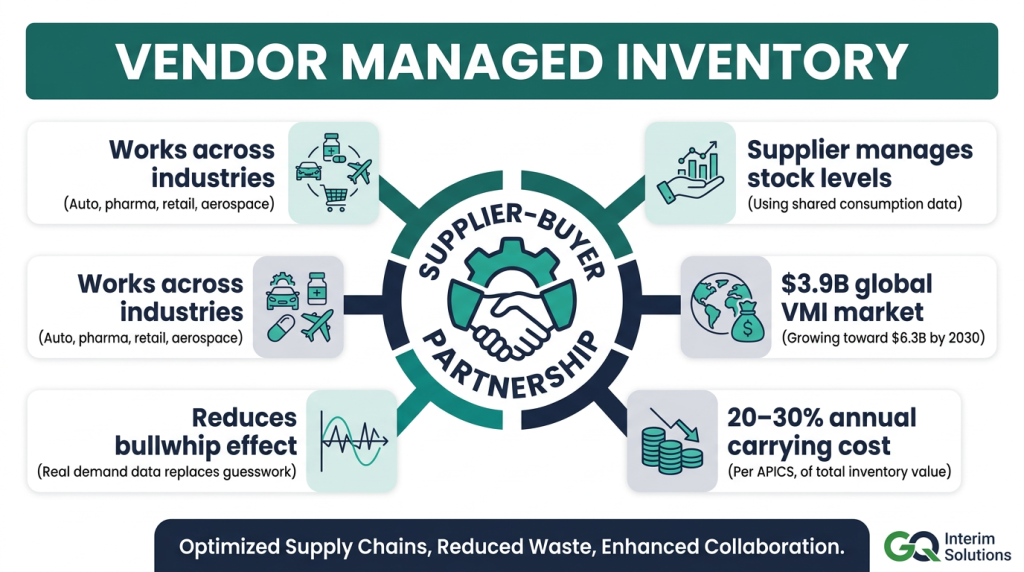
- Wondering if Vendor Management Inventory is right for your plant or network? This guide unpacks how VMI works, where it delivers savings and stability, the pitfalls to avoid, and the KPIs and tech you need to stay in control.

- Managing every supplier the same way rarely delivers the best results. Supplier segmentation helps businesses prioritize supplier relationships, reduce risk, and focus procurement efforts where they create the greatest value.

- Hiring a senior sales leader is one of the most important decisions a growing business can make. Learn how sales executive search works, when it's the right choice, and why it consistently delivers stronger long-term hiring outcomes than traditional recruitment.

- Great products don't happen by accident. Behind every successful product is strong leadership that aligns business strategy, customer needs, and cross-functional teams. Discover what product leadership involves, why it matters, and how it helps businesses make better product decisions.
