


- What Is the theory of constraints?
- The five steps of the theory of constraints
- The goal of theory of constraint
What Is the theory of constraints?
The theory of constraints (TOC) is an organizational change method usually applied to running and improving an organization. The main concept of TOC is that every organization must have at least one constraint. A constraint is any limiting factor that stands in the way of achieving a goal. In manufacturing process is constraint usually a bottleneck.
However, many non manufacturing constraints exist, such as market demand, or a sales department’s ability to translate market demand into orders. TOC is used to logically and systematically answer three questions needed for any process of ongoing improvement:
- What to change?
- To what to change?
- How to cause the change?
The five steps of the theory of constraints
1. Identify the system constraint
Identify the currently existing limiting factor/constraint (the single part of the process that limits the rate at which the goal is achieved).
2. Decide how to exploit the constraint
Make quick improvements to the throughput of the constraint using existing resources (i.e. make the most of what you have).
3. Subordinate everything else
Review all other factors in the process to make sure that they are working right and supporting the necessities of the constraint. The non constraint components of the system must be adjusted to a “setting” that will enable the constraint to operate at maximum effectiveness.
4. Elevate the constraint
If the constraint has not moved from process, consider what further actions can be taken to become it non-constraint. Normally, actions are continued at this step until the constraint has been “broken” (until it has moved somewhere else). In some cases, capital investment may be required.
5. Return to step one, but beware of “inertia”
This is a continuous improvement cycle. Therefore, once a constraint is resolved the next constraint should immediately be identified This step is a reminder to never stop with improving and work on resolving of other constraints.
Download our e-book
Download our free e-book to discover how GQ Interim can transform your business with expert leadership solutions!
The goal of theory of constraint
TOC expectes the goal is to make (more) money. The following measures are the only way to increase profit through TOC:
Throughput
The rate at which the entire organization generates money through sales for a product or service. Throughput represents all the money coming into an organization.
Inventory
All the money the organization invests in things it intends to sell. Inventory represents all the money tied-up inside an organization. Official definition includes facilities, equipment, obsolete items, as well as raw material, work in process, and finished goods.
Operating expense
Operating expense is all the money an organization uses to change the inventory into throughput. It represents the money going-out of the organization. Examples include direct labour, utilities, consumable supplies, and depreciation of assets.
Conclusion
By concentrating resources on the true constraint, TOC delivers faster, measurable gains than broad, unfocused efforts. Exploiting and subordinating around the bottleneck aligns the whole system, elevating capacity where it matters most and boosting throughput while controlling inventory and operating expense. As each constraint is broken, a new one emerges—making TOC a continuous improvement cycle that keeps organizations agile, profit-oriented, and laser‑focused on what most limits their goals.
Interested in Interim Expert?
Discover how interim management can dramatically increase the efficiency of your business. Get in touch with our team to learn how working with GQ Interim will improve your company.
- Get started within few days
- Database of 10 000+ consultants
- Solving crucial problems of your business
- Custom solutions for your business needs
- Proven results with measurable impact
Related articles
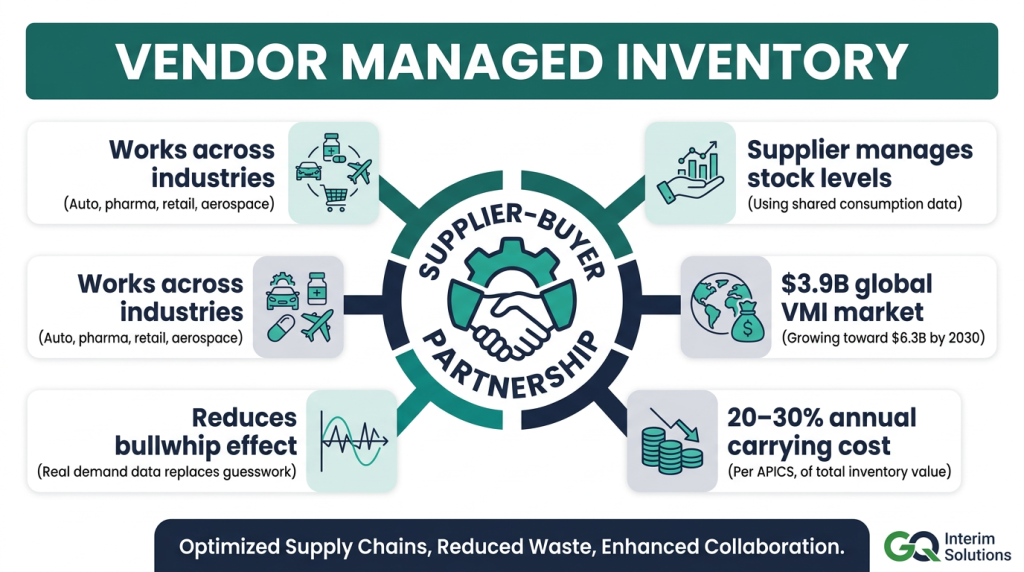
- Wondering if Vendor Management Inventory is right for your plant or network? This guide unpacks how VMI works, where it delivers savings and stability, the pitfalls to avoid, and the KPIs and tech you need to stay in control.

- Managing every supplier the same way rarely delivers the best results. Supplier segmentation helps businesses prioritize supplier relationships, reduce risk, and focus procurement efforts where they create the greatest value.

- Hiring a senior sales leader is one of the most important decisions a growing business can make. Learn how sales executive search works, when it's the right choice, and why it consistently delivers stronger long-term hiring outcomes than traditional recruitment.

- Great products don't happen by accident. Behind every successful product is strong leadership that aligns business strategy, customer needs, and cross-functional teams. Discover what product leadership involves, why it matters, and how it helps businesses make better product decisions.
