
Product leadership is the work of deciding which products a company builds, for which customers and why, and then keeping engineering, sales, quality and production behind that decision. Product management delivers the plan. Product leadership sets it, makes the trade-offs and owns the result, from the first idea to a stable launch in the plant.
A good idea is rarely enough. Which customer problems deserve attention, which features create real value and which projects should wait are decisions made long before launch. They decide whether a product gains momentum or struggles to find its place in the market. This guide explains what product leadership covers, how it differs from product management, which roles and skills it needs, how to measure it, and what to do when the role is empty during a launch.
- Product leadership decides what to build and why. Product management makes sure it gets built well.
- A product leader owns the vision, the priorities and the trade-offs between customers, cost and capacity.
- In manufacturing, product leadership ends on the shop floor: a product counts only when the plant can build it at target cost and quality.
- Measure it with outcomes: launches on plan, margin per product, field complaints and customer retention.
What is product leadership?
Product leadership is the discipline of setting a product’s direction while balancing customer needs, commercial goals and technical limits. It combines strategy with practical decisions. It answers not only what to build, but also why it matters and what the company will not do.
Product leadership means owning the direction of a product or a product portfolio: the vision, the priorities, the investment decisions and the alignment of every department that touches the product. A product leader is the person accountable for those decisions, often with a title such as head of product, VP of product or chief product officer.
Product leaders do not work alone. They depend on engineering, design, quality, sales, marketing, finance, purchasing and production. Each department sees the product differently, and someone has to connect those views and take decisions that are good for the customer and for the business.
Without that alignment, teams pull in different directions. Engineering improves the technology, sales asks for custom variants for single customers, and marketing promotes features that are no longer on the roadmap. Product leadership keeps those priorities connected.
What is the difference between product leadership and product management?
The two terms are often used as if they meant the same thing, but they describe different responsibilities. A simple way to put it: product management helps teams build the product right, and product leadership helps them build the right product. A company needs both.
| Area | Product leadership | Product management |
|---|---|---|
| Main question | What should we build, and why? | How do we deliver it well? |
| Horizon | Portfolio and the next 2–5 years | Current product and the next releases |
| Decisions | Vision, investment, which markets to enter or leave | Requirements, scope, release plan |
| Works with | Executive team, sales, finance, operations | Engineering, design, quality, production |
| Measured by | Revenue and margin per product, market share, retention | Delivery on plan, quality of releases, customer feedback |
| Typical titles | Head of product, VP of product, chief product officer | Product manager, product owner, program manager |
What does a product leader do?
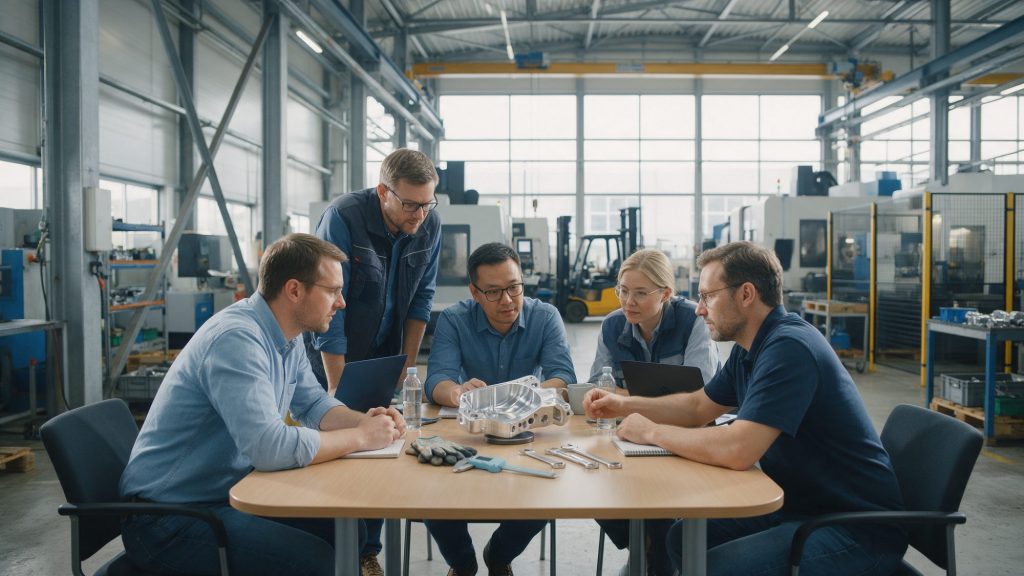
Every company organizes product leadership in its own way, but the core responsibilities are similar:
Which product leadership roles exist?
Titles differ between companies, and in a mid-sized manufacturer one person often holds several of these roles. The usual levels are:
- Chief product officer: a member of the executive team. Owns the whole portfolio and its link to company strategy.
- VP of product: leads the product organization and its managers. Turns the strategy into portfolio plans and budgets.
- Head of product: often the most senior product role in a smaller company or a business unit. Sets direction and still works closely with the teams.
- Product line or portfolio manager: owns a product family, its pricing and its margin.
- Program or launch manager: common in automotive and industrial companies. Brings one new product from development into series production.
In many industrial companies the product decisions sit with the managing director, the sales director or the head of engineering. That works while the portfolio is small. It becomes a bottleneck once there are several product lines, customers and plants.
Why does product leadership matter in manufacturing?
Products rarely fail because teams stop working hard. More often, they lose direction. Roadmaps change every quarter, new requests interrupt planned work, and people are spread across too many projects to make real progress on any of them.
Strong product leadership creates focus. When priorities are clear, engineering switches between projects less often, and sales can give customers realistic commitments.
In manufacturing the cost of a wrong product decision shows up late, in the plant. Designs that are hard to build, variants without planned capacity and suppliers chosen too late all end up as scrap, overtime and a delayed ramp-up. Good product leadership brings production, quality and purchasing into the decisions early, when changes are still cheap.
What are the most common product leadership challenges?
- Rapid growth: new customers ask for more variants, teams grow quickly and the portfolio becomes harder to coordinate.
- New product launch: decisions are made with little market feedback, while teams balance speed, quality and cost targets.
- Digital transformation: existing products must keep serving customers while new technologies, platforms and business models are introduced.
- Communication across departments: each department optimizes for its own goals, and without clear product leadership they work toward conflicting targets.
The roadmap changes after every large customer call. Engineering learns about sales commitments from the customer. Nobody can say which product makes money. The plant sees a new design for the first time at the pilot run. Any one of these means product decisions have no clear owner.
Which skills does a product leader need?
Product leadership combines strategic thinking with strong execution. These are the skills to look for:
- Customer understanding: knows the customer’s problem well enough to say no to requests that do not solve it.
- Commercial sense: understands pricing, margin and the business case behind each product.
- Decisions with incomplete information: decides, explains why and corrects course when the data changes.
- Influence without authority: brings engineering, sales, finance and production to one plan through credibility and clear communication.
- Technical and production literacy: in manufacturing, knows enough about the process, the tooling and quality requirements to judge what a design change really costs.
- Focus on outcomes: more features do not make a better product. Solving real customer problems does.
Strong product leadership keeps strategy, customer needs and execution moving in the same direction. When that alignment is missing, even good products can lose time, focus and market relevance.
The interim management guide for manufacturing companies
When an experienced interim manager is the fastest way to cover a launch or a leadership gap, and how to brief and onboard one.
- When an interim manager pays off
- How to write a mandate
- The first 30 days, week by week
How do you measure product leadership?
Judge product leadership by outcomes, not by the number of features shipped. A short scorecard is enough for most companies:
- Revenue and margin per product, compared with the business case.
- Launches on plan: the share of new products that reach series production on the agreed date, cost and quality.
- Time to market from approved concept to the first customer delivery.
- Field quality: customer complaints and warranty cases in the first months after launch.
- Customer retention and share of business with key accounts.
- Portfolio health: how many products are loss-making or kept alive for a single customer.
Review the scorecard with the executive team every quarter. Weak numbers in one area point to the decisions to look at again. For the tools that help such a review, see our guide to decision making tools.
How do you hire a product leader, or cover the role during a launch?
Product leadership does not always need a new permanent executive. Some situations need experienced leadership for a specific phase: a new product launch, preparing a plant for series production, scaling operations, or a period of organizational change. These steps work for both a permanent hire and an interim one:
- Define the resultWrite down what must be different in 6–12 months: a product launched, a portfolio cleaned up, margins back on target.
- Decide permanent or interimA long-term portfolio role needs a permanent leader. A launch, a ramp-up or a vacancy that cannot wait is often better covered by an interim manager.
- Set the mandateAgree which decisions the product leader takes alone: priorities, scope, suppliers, budget. Name one sponsor in the executive team.
- Choose on comparable experienceLook for someone who has led the same kind of product through the same phase, in a similar industry, with results they can put numbers on.
- Plan the handoverFor an interim assignment, agree from day one who takes over and when. The goal is a team that keeps working without the interim manager.
If you go the interim route, our guide on how to choose an interim manager covers the interview questions and the contract, and what an interim manager does explains the model.
How GQ Interim helps with product launches
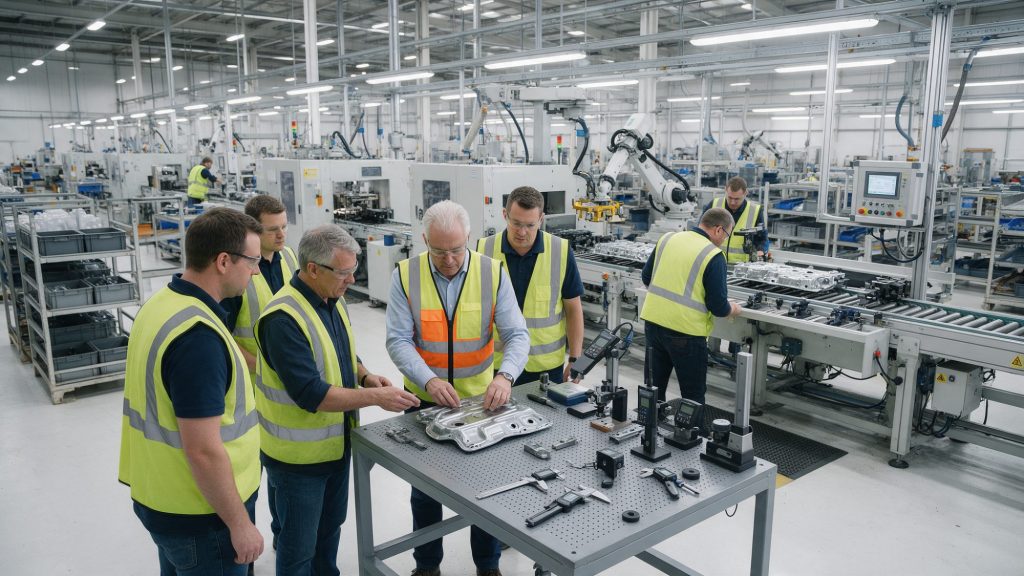
Since 2011 we have completed more than 1,550 projects in manufacturing and industrial companies across Central and Eastern Europe, for clients such as Stellantis, Porsche, Siemens, Valeo and Magna. When a new product has to reach series production and the leadership is missing, we send interim launch, program, production and quality managers who have done it before. They connect engineering, quality, supply chain and production, keep the launch on plan and hand over a stable process to your team. Read more about our interim management for automotive and the typical automotive launch assignments.
Once production runs at target and the team can continue on its own, responsibility goes back to the permanent leadership. A good interim manager plans that handover from the first week.
Conclusion
Product leadership connects strategy with execution. It decides what to build and why, aligns the departments behind that decision and stays accountable until the product works for the customer and in the plant. Whether a company is launching a new product, cleaning up a portfolio or growing fast, clear product leadership is what keeps good products from losing direction.
Get a launch leader on site this week
Tell us which product is launching and what has to happen. We come back with experts who have brought new products into series production before.
Frequently asked questions
What is product leadership?
Product leadership is owning the direction of a product or portfolio: the vision, the priorities, the investment decisions and the alignment of every department that touches the product. It decides what to build and why, and stays accountable for the result.
What does a product leader do?
A product leader sets the product vision, decides priorities and trade-offs, aligns engineering, sales, finance and production, filters customer feedback into real demand, and owns the commercial result. In manufacturing this includes making sure the plant can build the product at target cost and quality.
What is the difference between product leadership and product management?
Product leadership decides what to build and why, over a horizon of several years and across the portfolio. Product management turns those decisions into requirements and releases and makes sure the product is delivered well. A company needs both.
What is the difference between a head of product, a VP of product and a chief product officer?
A chief product officer sits in the executive team and owns the whole portfolio. A VP of product leads the product organization and turns strategy into plans and budgets. A head of product is often the most senior product role in a smaller company or business unit and works closer to the teams.
What skills does a product leader need?
Customer understanding, commercial sense, the ability to decide with incomplete information, influence without formal authority, and a focus on outcomes rather than features. In manufacturing, enough technical and production knowledge to judge what a design change really costs.
How do you measure product leadership?
With outcomes: revenue and margin per product against the business case, the share of launches that reach series production on plan, time to market, field complaints after launch, customer retention and the number of loss-making products in the portfolio.
When does an interim product or launch leader make sense?
When a launch or ramp-up cannot wait for a permanent hire, when the product leader has left during a critical phase, or when the company needs experience it does not have in-house for one project. The interim manager delivers the result and hands over to the permanent team.
How is product leadership different from engineering leadership?
Engineering leadership owns how the product is designed and built technically: the team, the methods and the technical quality. Product leadership owns what is built and why, and balances the technical view with customers, cost and commercial goals.