DFMEA vs PFMEA is a question of what you analyze. A DFMEA, or design failure mode and effects analysis, asks how the product design can fail to meet its requirements. A PFMEA, or process failure mode and effects analysis, asks how the manufacturing or assembly process can fail to make the product as designed. You need both, in that order.
Both methods use the same logic: functions, failure modes, effects, causes, controls and a risk rating. They differ in scope, owner, inputs and outputs. This guide explains what each one is, compares them side by side, shows how the AIAG-VDA 7-step approach and action priority apply to both, and walks through a short example of how a design risk turns into a process control.
- The DFMEA analyzes the product design. The PFMEA analyzes the process that makes it.
- The DFMEA assumes the part is made to the drawing. The PFMEA assumes the design is right and asks what the process can get wrong.
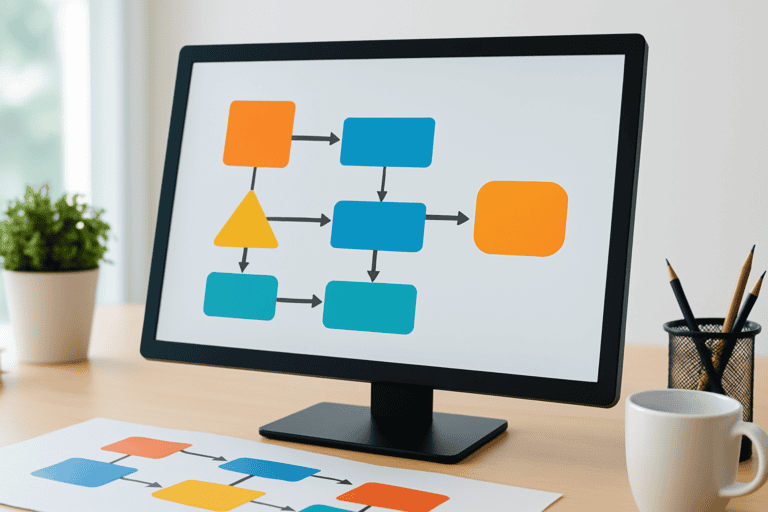
- The DFMEA starts from a block diagram and P-diagrams. The PFMEA starts from the process flow diagram.
- Special characteristics and effects flow from the DFMEA into the PFMEA and then into the control plan.
What is a DFMEA?
DFMEA stands for design failure mode and effects analysis. It is a structured risk analysis of a product, system, subsystem or component while it is still being designed. The team lists the functions and requirements of the design, asks how each function can fail, what the effect would be for the end user and what in the design could cause it.
Typical DFMEA causes are design decisions: a wall that is too thin, a material that ages too fast in heat, a tolerance stack-up that allows interference, or a missing requirement. The controls are design controls. Prevention controls are things like design rules, proven designs and simulation. Detection controls are tests and analyses that find a weak design before it is released, such as prototype tests or design verification.
A DFMEA finds the ways a product design can fail before the design is released, so the team can change the design instead of fixing problems in production or in the field.
What is a PFMEA?
PFMEA stands for process failure mode and effects analysis. It analyzes each step of a manufacturing or assembly process, including receiving, transport, storage, rework and inspection. For each step the team asks how the step can fail to deliver the product characteristic it should, what the effect is on the next operation, the plant, the customer and the end user, and which process cause is behind it.
Typical PFMEA causes are process causes: a wrong machine setting, a worn tool, a missing part, a wrong part or an operator error. The controls are process controls, such as error proofing, setup checks, parameter monitoring, gauging and inspection. Our guide to the PFMEA and control plan explains in depth how these controls become shop-floor instructions.
What is the difference between DFMEA and PFMEA?
The short answer: the DFMEA asks whether the product will work if it is made correctly. The PFMEA asks whether the process will make it correctly. The table compares the two methods point by point.
| Aspect | DFMEA | PFMEA |
|---|---|---|
| What is analyzed | The product design: system, subsystem, component, interfaces | The manufacturing and assembly process, step by step |
| Main question | How can the design fail to meet its functions and requirements? | How can the process fail to make the product as designed? |
| Basic assumption | The part is made to the drawing and the specification | The design is correct and meets its requirements |
| Owner and team | Design-responsible engineer, with testing, quality, process engineering and suppliers | Process or manufacturing engineer, with quality, production, maintenance, operators and design |
| When it starts and ends | Starts at the design concept, is completed before the design is released for tooling | Starts when the process concept and flow are known, is completed before the process is released for series production |
| Structure input | Block or boundary diagram, P-diagram, requirements, interface matrix | Process flow diagram, equipment list, DFMEA, special characteristics |
| Typical causes | Geometry, material, tolerances, design rules not followed | Settings, tools, fixtures, material handling, operator method |
| Controls | Design rules, simulation, design verification and validation tests | Error proofing, setup checks, parameter monitoring, inspection and gauging |
| Main outputs | Design changes, test plan, special characteristics on the drawing | Process changes, error proofing, the control plan and work instructions |
Both use severity, occurrence and detection ratings, but each on its own scale. In a DFMEA, occurrence rates how likely the design cause is, given the design controls. In a PFMEA, occurrence rates how likely the process cause is, given the process controls. Detection in a DFMEA means finding the weakness through tests before design release. Detection in a PFMEA means finding the defect or the cause in the plant before the part leaves.
When do you use a DFMEA and when a PFMEA?
Use a DFMEA when your company is responsible for the design: a new product, a design change, a new application of an existing design or a new operating environment. A supplier that builds to the customer’s drawing usually has no DFMEA of its own, but it still needs a PFMEA for its process.
Use a PFMEA for every new or changed manufacturing process: a new line, a new plant, a new tool, a process change or a move of production to another site. In product development the DFMEA comes first, and the PFMEA starts as soon as the process flow is known. In automotive, both are deliverables of APQP: the DFMEA in phase 2 and the PFMEA in phase 3. The two overlap, and both must be updated during the product’s whole life.
What is the AIAG-VDA 7-step approach?
Most automotive suppliers now follow the AIAG and VDA FMEA handbook, first published in 2019. It describes one method in seven steps, used for both the DFMEA and the PFMEA. Only the content of each step changes.
- Planning and preparationDefine the scope, the team, the tasks and the tools. The handbook summarizes this as the 5T: intent, timing, team, tasks and tools.
- Structure analysisDFMEA: break the product into system, subsystem and component, usually with a block diagram. PFMEA: break the process into steps and work elements such as machine, material, method and people.
- Function analysisDFMEA: name the functions and requirements of each element, often with a P-diagram. PFMEA: name what each process step must achieve and the product and process characteristics.
- Failure analysisBuild the failure chain for each function: the failure effect, the failure mode and the failure cause.
- Risk analysisRecord the current prevention and detection controls. Rate severity, occurrence and detection, then read the action priority from the table.
- OptimizationPlan actions for high and medium priority items, assign an owner and a target date, and rate the risk again after the actions are done.
- Results documentationReport the results and the actions taken to management and, where needed, to the customer.
Why is action priority used instead of RPN?
The older FMEA manuals ranked risks by the risk priority number, or RPN: severity multiplied by occurrence multiplied by detection. The weakness is that very different risks can get the same RPN. A rare failure with a safety effect could score lower than a frequent cosmetic defect.
The AIAG-VDA handbook replaces the RPN with action priority, or AP. A table assigns every combination of severity, occurrence and detection to high, medium or low priority. Severity carries the most weight, then occurrence, then detection. High priority means the team must act or document why the current controls are enough. The same logic applies to the DFMEA and the PFMEA, each with its own rating tables.
A low action priority that rests only on a good detection rating is a warning sign. In both the DFMEA and the PFMEA, prevention lowers the risk at its source. Detection only finds the problem after it exists.
The interim management guide for manufacturing companies
When to bring in an interim quality expert for a launch, an audit or a customer escalation, and how to brief one.
- When an interim manager pays off
- How to write a mandate
- The first 30 days, week by week
How does the DFMEA feed the PFMEA and the control plan?
The DFMEA, the PFMEA and the control plan form one chain. Customer needs enter the design, for example through quality function deployment. The DFMEA shows which product characteristics are critical for safety, regulations or function. Those become special characteristics on the drawing.
The PFMEA takes these characteristics over. For each process step that creates or changes a special characteristic, the team analyzes how the process can miss it. The effects from the DFMEA are reused, so the severity of the effect on the end user should be the same in both documents. The process controls from the PFMEA then go into the control plan, with sample size, frequency and reaction plan.
- Requirements: customer and legal requirements, functions and interfaces.
- DFMEA: design risks, design controls and the special characteristics.
- Drawing and specification: special characteristics marked with the agreed symbols.
- Process flow diagram and PFMEA: process risks for each step, with the same special characteristics.
- Control plan: how each process control is carried out in series production.
The link also works backward. When the PFMEA shows that a characteristic cannot be made reliably with the planned process, the design team should hear about it while the design can still change. When a defect reaches the customer, the problem solving, for example an 8D report, should update the PFMEA and, if the cause is in the design, the DFMEA too.
What does a DFMEA and PFMEA example look like?
This short example is illustrative, not a client case. The product is a molded plastic clip that holds a cable bundle to a car body panel. Its function is to keep the cables in place under vibration and heat over the life of the vehicle.
| Element | DFMEA, design of the clip | PFMEA, molding the clip |
|---|---|---|
| Function | Hold the cable bundle with a minimum retention force under vibration and heat | Mold the latch arm to the specified thickness |
| Failure mode | Retention force too low | Latch arm thinner than specified, or incomplete fill |
| Effect | Cables come loose, rattle and can chafe against the body | Same end-user effect, plus scrap and sorting in the plant |
| Cause | Latch arm thickness specified too thin for the material after heat aging | Holding pressure too low, or a worn mold insert |
| Prevention control | Design guideline for snap-fits, strength simulation | Monitored molding parameters, planned mold maintenance |
| Detection control | Pull-off test on prototypes after heat aging | Retention force test on samples, camera check of the latch |
| Result | Thicker latch arm, thickness marked as a special characteristic | Thickness and retention force added to the control plan |
The two analyses look at the same failure from two sides. The DFMEA fixed the design weakness and named the latch arm thickness as a special characteristic. The PFMEA made sure the molding process keeps that thickness, and the control plan says how it is checked in series production.
What are the most common DFMEA and PFMEA mistakes?
- Process causes in the DFMEA: “operator assembles wrong” belongs in the PFMEA. The DFMEA should name design causes.
- Design causes in the PFMEA: a wrong tolerance on the drawing is a design issue. Send it back to the DFMEA team.
- Different severity for the same effect: the end-user effect and its severity should match in both documents.
- Special characteristics lost on the way: a characteristic marked in the DFMEA is missing in the PFMEA or the control plan.
- FMEA as paperwork: a DFMEA filled in after design release, or a PFMEA written only for the customer audit, cannot change anything.
- One person fills in the form: without a cross-functional team, the analysis misses the knowledge of design, production and testing.
- No update after changes or complaints: both documents must be revised after every design or process change and every field or customer complaint.
How can an interim FMEA or quality engineer help?
Many plants have FMEAs that exist on paper but do not prevent failures. The DFMEA and PFMEA were written by different teams, the special characteristics do not match and the control plan is out of date. An experienced FMEA moderator or interim manager can lead the workshops, align the DFMEA, PFMEA and control plan for a product family, move the analysis to the AIAG-VDA format and train your engineers to keep it current.
GQ Interim has delivered 1,550+ projects in manufacturing and industrial companies across Central and Eastern Europe since 2011, for clients such as Stellantis, Porsche, Siemens, Valeo and Magna. Our database holds 7,500+ verified experts, including FMEA moderators, quality engineers and supplier quality engineers. We are certified to ISO 9001 and TISAX. See our FMEA consultant service.
Conclusion
The DFMEA makes the design reliable. The PFMEA makes the process capable of producing that design. Use the same 7-step method and action priority for both, start the DFMEA early, start the PFMEA as soon as the process flow is known, and carry the special characteristics through to the control plan. Then the two analyses work as one system that prevents defects.
Get an FMEA expert for your DFMEA and PFMEA this week
Tell us the product, the customer and the deadline. We come back with experts who have done this before.
Frequently asked questions
What does DFMEA mean?
DFMEA means design failure mode and effects analysis. It is a structured method to find how a product design can fail, what the effects would be and which design causes are behind them, so the design can be improved before it is released.
What is the main difference between PFMEA and DFMEA?
The DFMEA analyzes the product design and assumes the part is made correctly. The PFMEA analyzes the manufacturing and assembly process and assumes the design is correct. The DFMEA leads to design changes and tests. The PFMEA leads to process controls and the control plan.
Which comes first, DFMEA or PFMEA?
The DFMEA starts first, at the design concept. The PFMEA starts when the process flow is known and uses the DFMEA as an input. In practice the two overlap and are updated together during development and series production.
Who is responsible for the DFMEA and the PFMEA?
The design-responsible engineer owns the DFMEA. The process or manufacturing engineer owns the PFMEA. Both need a cross-functional team, including quality, testing, production and, where relevant, suppliers and customers.
Is the severity the same in the DFMEA and the PFMEA?
For the same effect on the end user, it should be. The PFMEA reuses the effects from the DFMEA, so the end-user severity should match. The PFMEA also rates effects that the DFMEA does not cover, such as scrap, rework or a stop in the plant.
What is the difference between DFMEA, PFMEA and a system FMEA?
A system FMEA looks at a whole system and the interfaces between its subsystems. It is a design FMEA at the highest level. The AIAG-VDA handbook also describes a supplemental FMEA for monitoring and system response, or FMEA-MSR, for failures that a vehicle system detects and reacts to in use.
Does IATF 16949 require a DFMEA and a PFMEA?
Yes, for the organizations they apply to. IATF 16949 lists a product design risk analysis, the FMEA, among the design outputs in clause 8.3.5.1, and the process FMEA among the manufacturing process design outputs in clause 8.3.5.2. A supplier without design responsibility still needs a PFMEA.
Which FMEA standards apply besides AIAG-VDA?
SAE J1739 is the SAE standard for design and process FMEA, used mainly in the US automotive industry. IEC 60812 is the general international standard for FMEA. Many customers also have their own FMEA requirements on top of these.
Can you use the same software for DFMEA and PFMEA?
Yes. Dedicated FMEA software handles both and links the DFMEA, the PFMEA, the special characteristics and the control plan in one database, so a change in one document can be carried to the others. Many plants still use spreadsheets, which makes this link harder to keep.